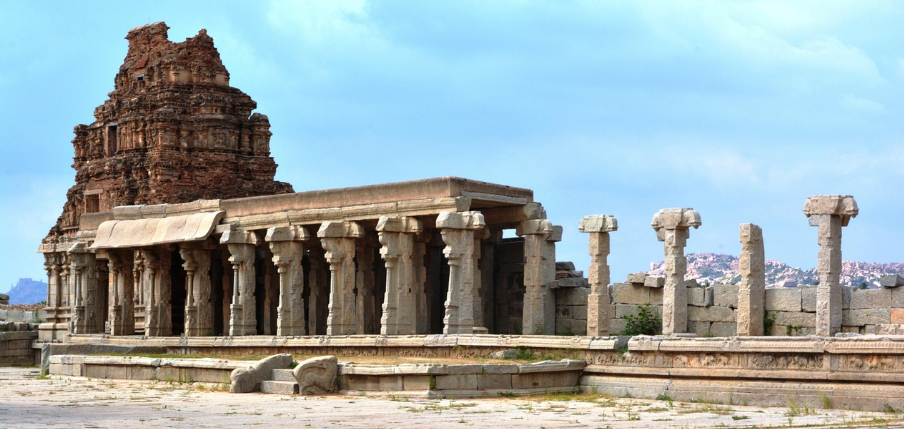
Ancient carved stone temple pillars and mandapa of Bharat overlooking sacred landscape

How Much of India’s Extraordinary Heritage Do We Really Know?

Thousands of monuments, ancient settlements, sacred landscapes, archaeological sites and living traditions surround us — yet most of us encounter only a fraction of them.

And Even When We Visit Incredible Places…
Do We Really Understand Why They Matter?

We may see the monument, hear a few dates, take photographs and move on — without understanding its history, the civilization that created it, the landscape around it, or the larger story it belongs to.

And when we ourselves lose that understanding, the next generation may inherit the names, traditions and identity — but not the meaning behind them.

No ordinary travel agent can fulfil this.

You need experts who understand the history, i.e. those who have researched these places, walked these landscapes, studied their histories and connected the dots.

People who live and breathe this heritage. One such person is Chandru Ramesh. Meet Chandru

What Bhumivox Really Is

A journey should give you more than a list of places you visited.

When we plan a Bhumivox journey, we don’t begin by asking how many sites we can fit into a day. We begin with something simpler: What should you understand by the time you come back?

A monument rarely makes complete sense on its own. There is usually a landscape around it, a story behind it, a historical period that shaped it, traditions that grew around it, and people who have carried those traditions forward.

That is what we try to bring together.

History • Archaeology • Sacred geography • Architecture • Texts • Local traditions • Conversations

Sometimes even the food, the road between two places, or a small site that most travellers would simply pass by.

Because very often, one place helps you understand another.

And that changes the journey.

  • You are no longer just moving from one attraction to the next.
  • You begin to notice connections.
  • You understand why a place mattered.
  • You start seeing things you would probably have missed on your own.

And occasionally, something stays with you.

A story. A question. A landscape. A conversation.

Sometimes, a journey can remain with you for years after you return home.

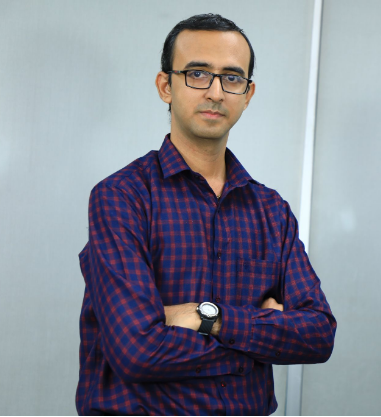
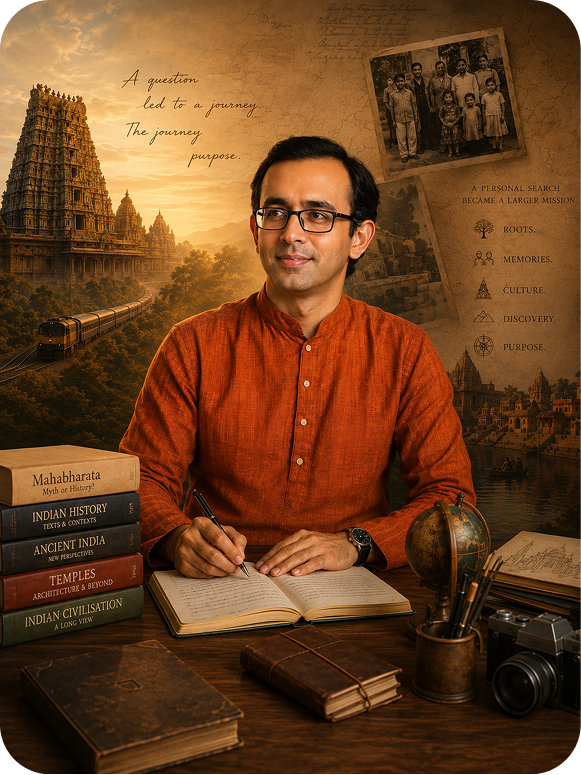
Chandru Ramesh, founder of Bhumivox, seated at a desk surrounded by books on Indian history

How Bhumivox Began

For Chandru, This Was Never Just About History.

Growing up in Tamil Nadu in a Sindhi family, Chandru Ramesh encountered Bharat through different cultural worlds — temples and festivals, family memories and traditions, stories from the epics and the landscapes around him.

As a teenager, one question began to stay with him:

“What am I meant to do with my life?”

He studied engineering, became a software professional and followed a conventional career. But history never really left him. He kept reading, travelling and asking questions about the civilisation he had inherited — and how little of it most of us truly understand.

A long journey through North India eventually changed the direction of his life. It led to years of research and to his book, Mahabharata: Myth or History?

That search later grew into Historika Foundations — created to research, document and communicate India’s heritage.

However, another question followed:

“What is the use of research if people never get to experience it?”

Books can explain a civilization.

A lecture can introduce it.

But standing where history happened, walking the landscape, hearing its stories and seeing the connections for yourself can do something different.

That thought became Bhumivox.

Not simply a company that takes people from one destination to another, but a way of bringing research, travel and lived experience together.

Because the more deeply you understand a place, the more meaningful the journey becomes.

And sometimes, the more deeply you understand the past, the more clearly you understand your own roots.

“A Story That Stayed With Me”

Over the years, while travelling across India and visiting historical sites, I was often deeply moved by what I saw — but also pained by the condition of many of them.

Across the centuries, thousands of historical sites and structures have been lost, damaged or forgotten because of war, neglect, changing landscapes, natural forces and human activity. And once a site disappears, we often lose much more than stone — we lose a part of the memory attached to it.

At Srirangam, one story brought this home to me very strongly.

During the multitudes of conflicts of the 14th century, the processional deity Namperumal was taken away from the temple for safety and remained displaced for decades before being brought back and reconsecrated in 1371–72 CE.

What stayed with me was not only the event, but the people behind it.

Someone had to protect the deity. Someone had to preserve the memory. Someone had to believe that one day it would return.

They were preserving more than a temple.

They were preserving continuity.

That thought stayed with me and gradually became part of my own mission.

We may not have to carry temples on our shoulders today. However, we do have a responsibility to understand, preserve and carry their stories forward.

For me, that mission began with the tangible heritage of this ancient land of Bharata — identifying, documenting and mapping historical and archaeological sites before more of them are lost to time, neglect or development.
Two Organisations. Distinct Roles. A Shared Respect for Heritage.

Historika Foundations

Historika is an independent nonprofit working to research, document, map and help preserve India’s historical and civilisational heritage.

For Chandru Ramesh, one question remained:
How do we help more people discover, understand and care about this heritage?

That desire eventually led to Bhumivox Experiences.

Bhumivox Experiences

Bhumivox is a separate commercial travel company creating research-led heritage and civilisational journeys that help travellers understand the history, landscapes, traditions and people behind the places they visit.

Historika works to research and preserve heritage.
Bhumivox helps people experience and understand it.

The two organisations remain operationally distinct, but share a larger commitment.

Historika Foundations is a beneficiary of Bhumivox.

Bhumivox has committed a percentage of its annual profits to Historika Foundations, helping support its work in research, documentation, mapping and heritage preservation.

As Bhumivox grows, so does its contribution to preserving India’s heritage.

WHAT MAKES A BHUMIVOX JOURNEY DIFFERENT

The Outer Journey. The Inner Journey.

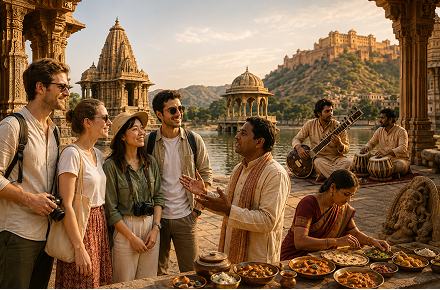
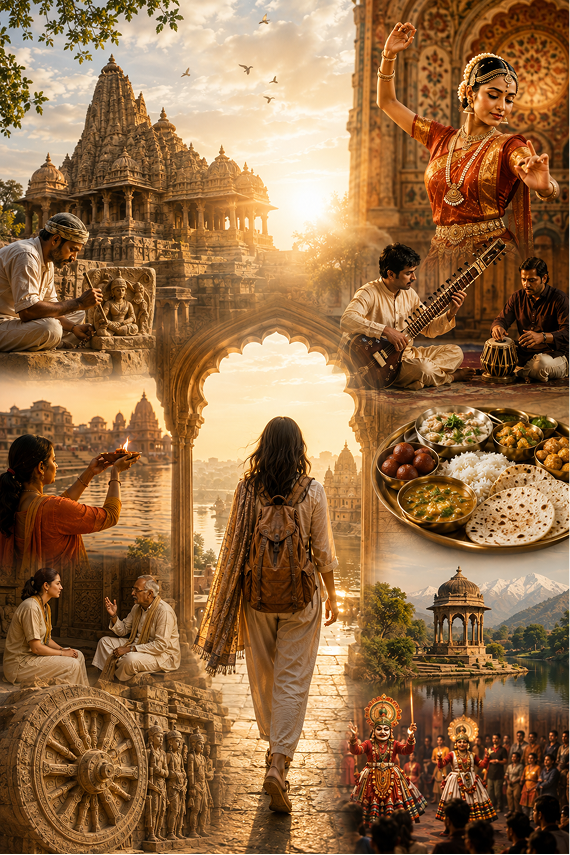
A collage of Indian cultural experiences — temples, dance, music, food, rituals and landscapes

India’s civilisation was never expressed through books and philosophy alone.

Architecture, sculpture, music, dance, storytelling, festivals, food, ritual and pilgrimage often carried deeper ideas about how to live — about dharma, compassion, self-discipline, devotion, understanding one’s purpose, knowing oneself and ultimately seeking the Divine.

A temple was therefore more than architecture.

A dance could carry the story of Krishna.

A sculpture could express philosophy.

An epic could make us reflect on duty, ambition and consequence.

A pilgrimage could be both a journey across a landscape and a journey within.

Indian aesthetics also explored the emotions such experiences could awaken:

Adbhuta — Wonder

Vīra — Courage

Karuṇā — Compassion

Śānta — Stillness

This is why a Bhumivox journey need not end with learning historical facts.

A Mahabharata landscape may make you think about family, duty or ambition. A temple may make you reflect on devotion. A tradition encountered on the road may help you look at another community with greater understanding.

And sometimes, standing where generations before us lived, struggled, created, worshipped and searched for meaning makes us look at our own lives differently.

Who Bhumivox Is For

Different travellers come with different questions. All are looking for something deeper.

Indians Rediscovering Bharat

Indians Rediscovering Bharat

For those who have travelled across India before, yet feel there is still so much they have never really understood.

Discover places you may never have heard of, understand the stories behind familiar ones, and reconnect with the history, traditions and civilisational roots that shaped the land you call home.

Indians Around the World

Indians Around the World

For NRIs and the global Indian diaspora who want their connection with India to mean more than an occasional visit home.

Walk the landscapes behind the stories you grew up hearing, rediscover traditions with greater context, and help the next generation understand not only where they come from, but what that inheritance means.

Travellers From Around the World

Travellers From Around the World

For curious travellers who want to encounter India beyond monuments, photographs and guidebook summaries.

Explore its history, philosophy, sacred landscapes, architecture, food, traditions and living cultures with the context needed to understand how they connect.

Depth, Without Giving Up Comfort

The history may be deep. The travel shouldn’t feel difficult.
We take care of the practical details so you can focus on the journey itself.

What We Believe

People protect what they understand and value.

Heritage should not merely be seen. It should be understood.

Knowing where we come from can give us confidence, perspective and a deeper sense of belonging.

And history deserves honesty — its achievements and failures, continuities and conflicts, what survived, what was lost and what we still do not know.

Our Mission

To create journeys that help people discover, understand and connect with civilisations more deeply — bringing together history, landscapes, traditions, people and meaningful travel.

We want travellers to return with more than photographs: with knowledge, connection and something worth carrying forward.

Our Vision

To help redefine heritage tourism — from sightseeing to understanding & experience.

We want Bhumivox to become one of the world’s most trusted names in research-led civilisational travel, helping more people discover extraordinary heritage, reconnect with their roots and experience the deeper stories behind the places they visit.

And as Bhumivox grows, we hope its success can contribute to the larger work of researching, documenting and preserving heritage for generations to come.

HISTORIAN · AUTHOR · FILMMAKER · HERITAGE RESEARCHER

Chandru Ramesh

Founder & Chief Experience Officer, Bhumivox Experiences

Founder & Director, Historika Foundations


Chandru began his career as a software engineer, but his long-standing interest in history gradually took him into heritage research, archaeology, ancient texts, sacred geography and field exploration.

He is the author of Mahabharata: Myth or History?, and his work through books, films, lectures and public conversations has reached audiences in India and around the world. He is also pursuing doctoral research at the Indian Institute of Technology.

But what matters to a Bhumivox traveller is not simply the research.

It is what Chandru does with it on the ground.

He connects a monument to the landscape around it, a story to the evidence behind it, and one place to another — helping travellers see connections they may otherwise never notice.

That approach shapes the larger philosophy of every Bhumivox journey:
Go beyond seeing the place. Understand why it matters.

Read Chandru Ramesh’s Full Story →
Chandru Ramesh - Founder & Director
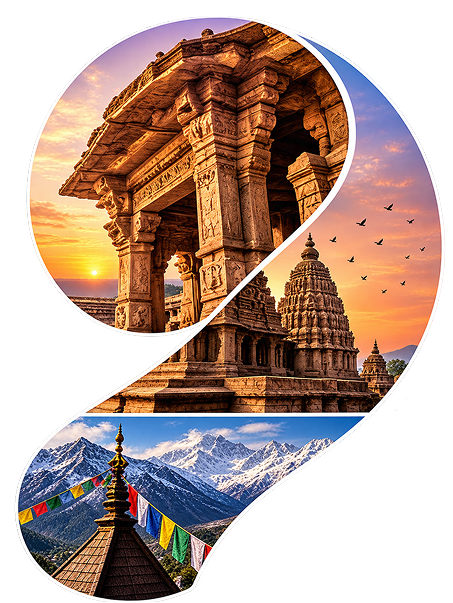
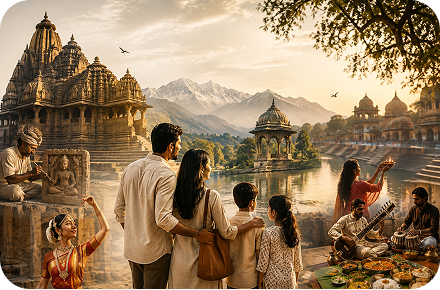
Indian heritage landscapes and temples collage

The Journey Has Just Begun

India cannot be understood through one monument, one state, one language — or one journey.

There will always be another landscape to explore, another story to uncover, another connection waiting to be understood.

At Bhumivox, we would rather grow slowly and meaningfully than turn heritage into another checklist of destinations.

Come with questions.

Walk through the connections.

Listen to what the land remembers.

And return with more than photographs.

Return with stories, perspective, a deeper understanding of Bharat — and perhaps, a little more understanding of yourself.